Within the space of a few days, the Bahamas Humane Society and Ministry of Tourism have undergone significant leadership changes. The organizations could hardly be more different. But their choices have something important in common: experience.
NASSAU, The Bahamas — Sometimes change arrives with an election, a crisis or a grand announcement.
And sometimes the guard simply changes.
Within a matter of days, two very different Bahamian institutions have appointed new leaders.
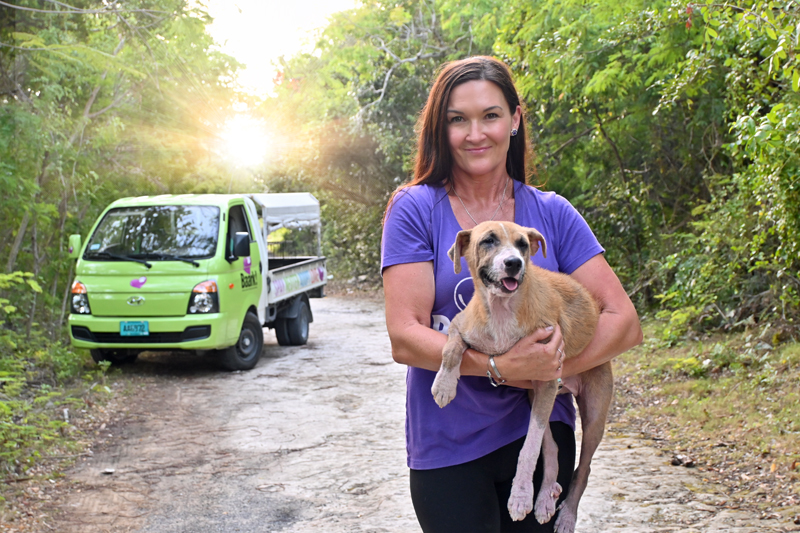
At the Bahamas Humane Society, Lissa McComb Pinder has succeeded Kim Aranha as president after Aranha’s remarkable 19 years at the helm.
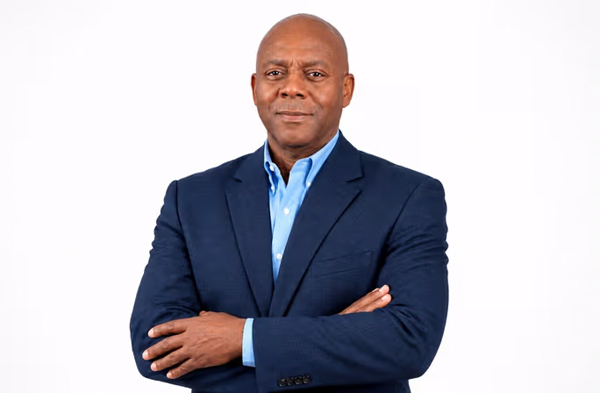
And at the Ministry of Tourism, veteran hotelier Jackson Alexander Weech has been appointed Director General, effective October 1, succeeding Latia Duncombe. The Tribune
One organization cares for abandoned and suffering animals.
The other helps oversee the industry responsible for the largest share of Bahamian economic activity.
On the surface, they have almost nothing in common.
But perhaps the two appointments tell us something encouraging about leadership.
Both organizations have turned to people who already know the work.
Nineteen years is a long watch
The leadership transition at the Bahamas Humane Society is particularly significant because it doesn’t happen very often.
Kim Aranha served as president for 19 years, with Charlotte Albury alongside her as vice president for more than 15.
Aranha herself summed up the moment rather wonderfully.
“Frankly, nobody should be president of anything for 19 years.”
She described the transition as a “changing of the guard.” The Tribune
Hence our headline.
But those 19 years also tell us something about the position.
This isn’t an honorary title handed out at an annual luncheon.
Animal welfare in The Bahamas can be difficult, emotional and often thankless work.
The Humane Society deals with abandoned dogs and cats, injured animals, unwanted litters, cruelty, veterinary needs and the consequences of a persistent stray-animal problem.
Finding somebody willing to accept responsibility for all of that apparently wasn’t easy.
Aranha said it took time to find someone both willing and able to succeed her.
In Lissa McComb Pinder, she believes the organization has found that person. The Tribune
Not a newcomer to animal welfare
McComb Pinder arrives with an important qualification:
She was already doing the work.
She has been a prominent animal-welfare advocate and a leader of the Bahamas Alliance for Animal Rights and Kindness—BAARK.
Her priorities for the Humane Society are practical rather than ceremonial: expand veterinary services, improve facilities and restore spay-and-neuter services. The Tribune
That last objective could be particularly important.
Anyone who has spent substantial time in The Bahamas knows the consequences of uncontrolled animal reproduction. Treating injured or abandoned animals addresses today’s suffering. Effective spaying and neutering can prevent tomorrow’s.
McComb Pinder put her motivation rather simply:
“Caring for animals isn’t a hobby for me, it’s a way of life.”
The new executive also brings additional expertise. Annabeth Maura becomes first vice president, veterinarian Dr. Valentino Grant of Caves Village Animal Hospital becomes second vice president, Amanda Meyers will serve as treasurer and Joanne Symonette as secretary. The Tribune
Importantly, Aranha and Albury aren’t simply disappearing.
They will remain involved through an advisory board, allowing the new leadership to draw upon nearly two decades of institutional knowledge while giving the incoming team room to lead. The Tribune
That is succession planning done sensibly.
And then Tourism did something interesting
Only days later came another changing of the guard.
The Ministry of Tourism announced that Jackson Weech will become Director General on October 1. Tourism Today
And this appointment deserves considerably more attention than the usual executive announcement.
Because Weech isn’t primarily a career government administrator who has spent his professional life looking at tourism from inside the Ministry.
He comes from the industry itself.
Weech has accumulated more than 35 years of tourism and hospitality experience in The Bahamas, the Caribbean and the United Kingdom.
Most recently, he served as vice president and general manager of the Royal Towers at Atlantis Paradise Island, with responsibility encompassing hotel operations, financial performance, guest experience, capital planning and senior management.
Before that he was vice president of hotel operations at Atlantis.
His résumé also includes Sandals Royal Bahamian, Sandals Negril and approximately 15 years as general manager of SuperClubs Breezes Bahamas. The Tribune
And since December 2024, Weech has served as president of the Bahamas Hotel and Tourism Association. Travel Industry Wire
In other words, the new Director General of Tourism has actually spent decades delivering tourism.
That matters.
The view from behind the front desk
Government and the tourism industry don’t always see the same Bahamas.
A ministry sees visitor-arrival statistics.
A hotelier sees occupancy.
Government sees an airport infrastructure programme.
A hotelier sees what an additional fee does to the price of getting a customer here.
Government sees record cruise arrivals.
A hotelier sees whether rooms are full.
Government sees tourism employment.
An operator sees whether enough trained people are available to fill tomorrow morning’s shift.
Government sees airlift as policy.
The industry sees whether an airline can profitably keep a route operating.
Neither perspective is inherently superior.
The Bahamas needs both.
But bringing someone into government who has spent decades living with the commercial consequences of tourism policy could narrow the distance between them.
That seems particularly timely.
Because the numbers are changing
The appointment comes at an interesting moment for Bahamian tourism.
The country welcomed a record 12.5 million visitors in 2025, the third consecutive record year. Bahamas.com
But as BahamasB2B has examined repeatedly in recent weeks, the headline number doesn’t tell the whole story.
The overwhelming majority of those visitors arrived by sea.
Stopover tourism—the visitors who fill hotel rooms—is growing again in 2026, but The Bahamas is simultaneously confronting questions about airlift, airport charges, Family Island development, hotel capacity and how much of the tourism dollar ultimately remains in the Bahamian economy.
Those are not abstract issues for Jackson Weech.
He has spent his career on the other side of them.
In fact, only this summer, the BHTA under Weech’s presidency was explicitly calling for the private sector to be more meaningfully involved when government considers initiatives affecting tourism, arguing that operators can provide a “boots on the ground” perspective. Bha Hotels
Now the man who helped make that argument is moving inside the Ministry.
That could become very interesting indeed.
Credit where it is due
A changing of the guard should not require diminishing those who came before.
Latia Duncombe led the Ministry first in an acting capacity beginning in January 2022 and formally as Director General from January 2023.
During her tenure, The Bahamas recorded three consecutive years of record visitor arrivals, culminating in 12.5 million visitors in 2025. The Ministry also launched its “A Lifetime of Islands” campaign and expanded its international tourism presence. GlobeNewswire
Tourism Minister Glenys Hanna Martin credited Duncombe with leaving a strong foundation and said her impact was “woven into the fabric of Bahamian tourism.” GlobeNewswire
Likewise, nearly two decades leading the Humane Society represents an enormous personal commitment by Kim Aranha, as does Charlotte Albury’s long service beside her.
Leadership transitions are healthiest when they preserve what worked while allowing successors to change what didn’t.
Two very different jobs
Nobody would confuse running the Bahamas Humane Society with directing the country’s tourism apparatus.
One operates primarily through compassion, volunteers, veterinary medicine and charitable support.
The other sits at the intersection of government policy and a multibillion-dollar international industry.
Yet the two incoming leaders face surprisingly similar challenges.
Both inherit institutions with long histories.
Both must work with established staffs and stakeholders.
Both need public confidence.
Both will be expected to modernize without discarding institutional knowledge.
And both arrive with extensive practical experience in the worlds they have been asked to lead.
Perhaps there is a broader lesson there.
Sometimes expertise should actually matter
Organizations frequently talk about finding leaders who “understand the industry.”
This month, two Bahamian institutions have done something refreshingly literal.
The Humane Society selected an animal-welfare advocate.
The Ministry of Tourism selected a hotelier.
Neither appointment guarantees success.
Experience doesn’t eliminate difficult decisions. It doesn’t make budgets larger, problems simpler or competing interests disappear.
But it does mean the person sitting at the head of the table already understands what the people around that table are talking about.
McComb Pinder doesn’t need someone to explain why spaying and neutering matter.
Weech doesn’t need someone to explain what happens when airlift disappears or a hotel struggles to fill rooms.
They’ve lived those problems.
The guard changes
There is something reassuring about good succession.
The people who carried an institution for years eventually step aside.
New people arrive.
Institutional knowledge is preserved.
New ideas enter.
And the work continues.
For the Bahamas Humane Society, that means another generation taking responsibility for animals that cannot speak for themselves.
For Tourism, it means putting one of the country’s most experienced hospitality professionals into the technical leadership of the industry upon which virtually every Bahamian ultimately depends.
Two very different institutions.
Two significant appointments.
And, within the space of a few days, two reminders that sometimes the best person to lead an organization is someone who already understands its work from the ground up.
The guard is changing.
It will be worth watching what happens next.
BahamasB2B | September 2026
Lead Photo: Lissa McComb Pinder, President, Bahamas Humane Society (Photo Credit: Ana-Lisa Wells for the Bahamian Project)