With more than 120 participating artists and exhibitors, international media attention and an increasingly ambitious programme, the fourth FUZE Caribbean Art Fair demonstrated how John Cox is helping transform Bahamian art from a national cultural achievement into an international creative industry.
By BahamasB2B
For decades, The Bahamas has sold the world an image of paradise.
Turquoise water. White sand. Palm trees. Luxury resorts.
It has been an extraordinarily successful formula.
But there is another Bahamas, one that cannot be adequately represented by a postcard or a tourism advertisement.
It is a country of painters, sculptors, photographers, musicians, designers and creative thinkers whose work explores the complexity of Caribbean identity.
And increasingly, that Bahamas is attracting international attention.
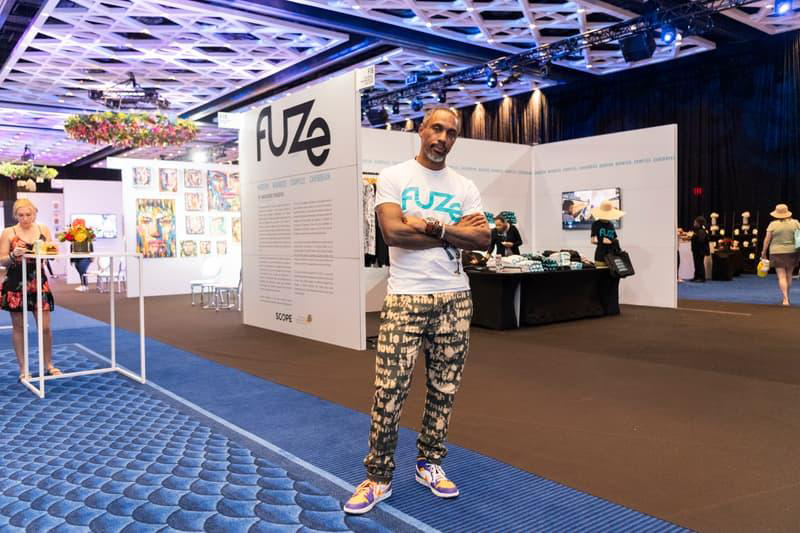
The fourth edition of FUZE Caribbean Art Fair, held October 21–25 at Baha Mar, offered compelling evidence of that transformation.
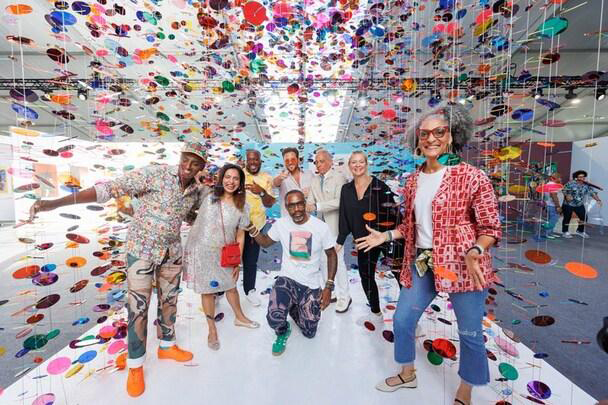
Bringing together more than 120 artists and exhibitors from approximately 20 countries, FUZE presented an ambitious programme of exhibitions, installations, conversations and cultural exchanges.
The theme was Coming Home.
But in many respects, the event was about something equally important: taking Caribbean art into the wider world.
John Cox and the Business of Art
At the centre of FUZE is Bahamian artist and arts administrator John Cox, whose influence on the country’s contemporary art scene extends back decades.
As a former chief curator of the National Art Gallery of The Bahamas, Cox helped shape an important period in the development of Bahamian contemporary art.
His involvement with Popopstudios and his subsequent leadership of arts and culture initiatives at Baha Mar reflect a longstanding commitment to developing opportunities for artists.
FUZE represents another stage in that effort.
Unlike a conventional exhibition, an art fair brings together artists, galleries, collectors, curators and cultural institutions within a concentrated marketplace.
It creates opportunities not only to exhibit work, but to establish relationships that may lead to representation, commissions, exhibitions, residencies and sales.
In an interview published during this year’s fair, Cox explained that the objective is to create access to an international art world that can be difficult for Caribbean artists to enter.
His ambition is not simply to sell paintings.
It is to help build an industry.
That distinction matters.
For many years, Bahamian artists have produced work of considerable quality without enjoying the commercial infrastructure available to artists in larger markets.
FUZE is attempting to address that imbalance.
The Artists Made the Argument
The strongest evidence of the fair’s artistic ambitions came from the work itself.
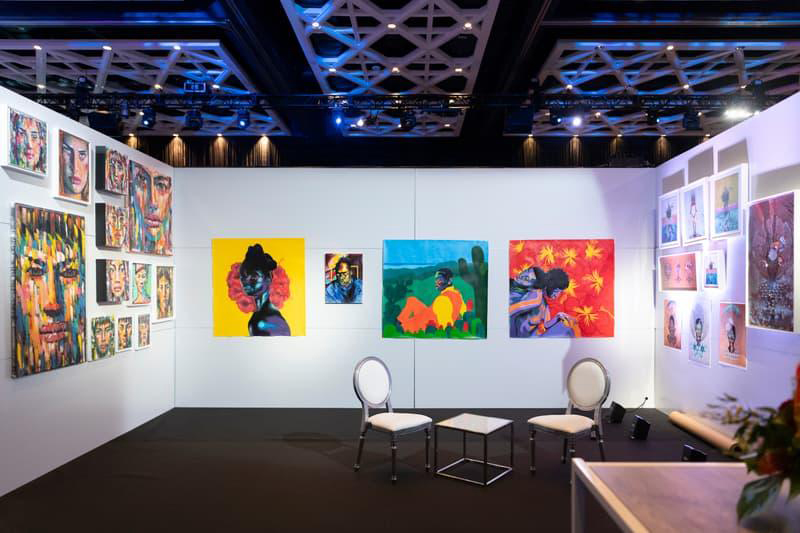
International arts publication FAD Magazine selected five noteworthy artists from the 2026 edition, including several with Bahamian connections.
Bahamian artist Tyesha Tynes presented an installation of six sculptural school uniforms, using clay, colour and the familiar imagery of childhood to explore questions of identity and belonging.
Photographer Delton Barrett, identified in the coverage as Bahamian-Jamaican, exhibited layered photographic work examining contemporary island life.
His Sons of Men presented a view of friendship and urban Bahamian experience far removed from conventional tourism imagery.
Painter Eddion Whyms explored spirituality, masculinity, vulnerability and inherited cultural beliefs through richly symbolic compositions.
Other featured artists included Savannah Baker, whose photographic practice examines Jamaican identity and memory, and Emily Alice Mitchell, whose work explores family history and the emotional connections between generations.
The diversity of approaches illustrated an important point.
Caribbean art is not a single style or subject.
It encompasses contemporary photography, conceptual sculpture, painting, installation, textile practices and other disciplines.
And it is increasingly engaged with the same intellectual and artistic conversations taking place in major international art centres.
More Than an Exhibition
FUZE’s programme extended beyond the display of artwork.
The 2026 edition included discussions, presentations and opportunities for artists and curators to exchange ideas.
Among the notable participants were Derrick Adams and Gio Swaby, featured in a conversation moderated by Cydne Coleby.
Programming also included contributions from artist and curator Annalee Davis.
These exchanges are important because artistic development depends on more than opportunities to display finished work.
Artists benefit from critical dialogue, professional relationships and exposure to different approaches.
Curators discover new talent.
Collectors develop an understanding of unfamiliar artistic traditions.
And younger artists encounter people who have successfully established careers beyond their home countries.
In that sense, FUZE is functioning as an educational and professional development platform as well as a marketplace.
International Attention
The 2026 fair also attracted coverage from international publications.
In an article published October 26, theGrio examined the way Bahamian and Caribbean artists are challenging familiar representations of the islands.
The publication interviewed Cox and featured artists and cultural figures discussing the relationship between tourism, cultural identity and contemporary artistic expression.
The article also highlighted a tension familiar to many Caribbean countries.
Tourism has provided international visibility and substantial economic opportunity.
But it can also encourage outsiders to see the islands primarily as destinations rather than as complex societies with their own cultural histories.
Art offers another way of telling those stories.
That is one of FUZE’s most significant contributions.
It provides a platform through which Caribbean artists can present their own interpretations of their societies, rather than relying on images created principally to attract visitors.
A Celebration of Bahamian Culture
The fair’s VIP reception brought together artists, collectors, diplomats and cultural leaders.
Among the notable moments was the Central Bank of The Bahamas’ unveiling of an installation honouring Bahamian trumpeter Giveton Gelin.
The tribute demonstrated that the country’s creative achievements extend well beyond the visual arts.
It also reinforced an important feature of FUZE: the fair celebrates Caribbean culture across disciplines rather than treating painting and sculpture as isolated pursuits.
Music, design, performance, photography and other creative fields all contribute to the broader cultural economy.
At the reception, government cultural representatives spoke about the importance of recognising Bahamian art alongside the country’s traditional tourism attractions.
It is a message increasingly reflected in the way the country presents itself internationally.
From Cultural Achievement to Economic Opportunity
The Bahamas has produced accomplished artists for generations.
What it has not always provided is a sufficiently developed commercial system through which those artists can earn sustainable incomes and build international careers.
A successful creative economy requires more than talent.
It needs galleries, collectors, professional representation, critics, curators, educational institutions, exhibition spaces, transportation and reliable systems for international transactions.
It also requires audiences willing to regard art as something more than decoration.
These are among the areas where FUZE may have a lasting impact.
By attracting galleries and cultural institutions from across the Caribbean, the fair encourages relationships that individual artists might otherwise find difficult to establish.
By connecting art with an internationally recognised resort, it also introduces contemporary Caribbean work to visitors who might never enter a traditional gallery.
But commercial success must ultimately be measured through more than attendance and international publicity.
The longer-term questions include how many artists gain representation, how many works are sold, whether new commissions emerge and whether professional opportunities continue after the fair closes.
Those outcomes will help determine FUZE’s enduring economic contribution.
Building on a Remarkable Artistic History
Bahamian contemporary art did not begin with FUZE.
The country has a substantial artistic history, shaped by generations of painters, sculptors, photographers and cultural pioneers.
The establishment of the National Art Gallery of The Bahamas in 2003 represented a major institutional milestone.
Independent initiatives and artist-run spaces helped foster experimentation and collaboration.
Popopstudios, among others, contributed to the development of a community in which artists could challenge conventions and pursue new directions.
Commercial galleries, including newer institutions such as TERN, have further expanded opportunities for artists to present their work.
FUZE builds upon that history.
Its significance lies partly in bringing together elements of an artistic community that have developed over many years and presenting them to an increasingly international audience.
The result is not simply another exhibition.
It is a platform connecting Bahamian artistic achievement with a wider Caribbean and international cultural network.
What Comes Next?
By the conclusion of its fourth edition, FUZE had demonstrated an expanding international reach, attracted specialist media attention and presented a substantial cross-section of contemporary Caribbean artistic practice.
Those are meaningful achievements.
Its broader economic impact, including sales, commissions and lasting professional opportunities, will require longer-term assessment.
But the fair has already contributed to an important change in how Bahamian art is presented.
For too long, the country’s international identity has been dominated by the beauty of its natural environment.
That beauty remains one of its greatest assets.
Yet The Bahamas also possesses a cultural richness that deserves recognition on its own terms.
John Cox and the artists participating in FUZE are helping to bring that cultural identity into sharper international focus.
The fair’s theme was Coming Home.
Perhaps its lasting contribution will be helping Bahamian and Caribbean artists establish careers that allow their work to travel the world without losing its connection to home.
The Bahamas has spent generations inviting the world to admire its beaches. FUZE is giving the world another reason to pay attention: the extraordinary creativity of its people.