Fifty-three years after witnessing the birth of an independent Bahamas, King Charles III returned to Nassau for a historic visit filled with celebration, remembrance and uncomfortable questions about the country’s colonial past. His return was more than a royal occasion. It offered a remarkable opportunity to reflect on how far The Bahamas has come since 1973 — and where the nation may be heading next.
By BahamasB2B | October 29, 2026
In July 1973, a 24-year-old Prince Charles stood at Clifford Park in Nassau and witnessed one of the most consequential moments in Bahamian history.
After more than three centuries of British colonial rule, The Bahamas was becoming an independent nation.
The Union Jack was lowered.
The new Bahamian flag was raised.
And a country that had spent generations under British administration took its place among the sovereign nations of the world.
The young Prince of Wales had come to represent his mother, Queen Elizabeth II, at the independence celebrations.
He could hardly have imagined that more than half a century would pass before he returned.
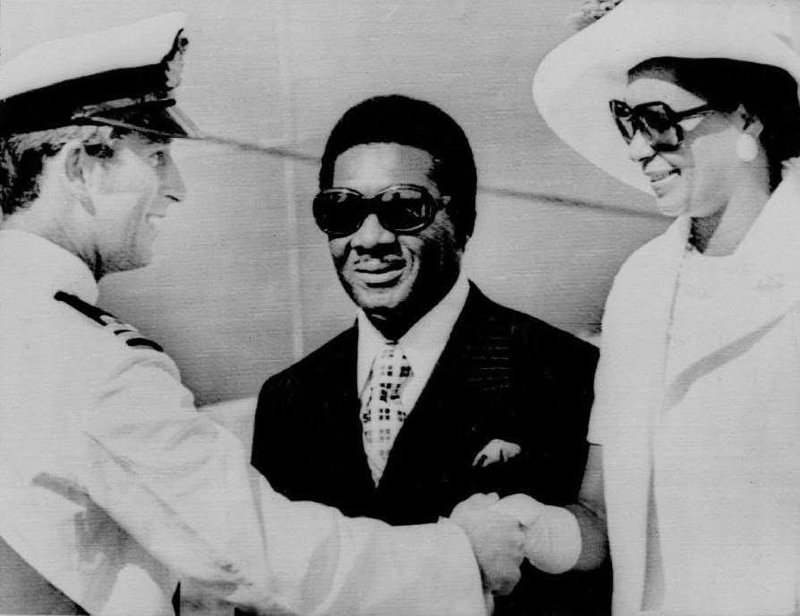
Nor, perhaps, could the Bahamians celebrating that night have imagined that the same young prince would one day return as their King.
Yet that is precisely what happened this week.
On Tuesday, October 27, King Charles III arrived in Nassau for his first official visit to The Bahamas since ascending the throne in September 2022.
Now 77, he returned to a country profoundly different from the one he had witnessed entering independence.
And he returned at a moment when the relationship between Caribbean nations and the British monarchy is undergoing its most significant reassessment in generations.
Back to Where It All Began
There was something particularly appropriate about the King’s first major public engagement.
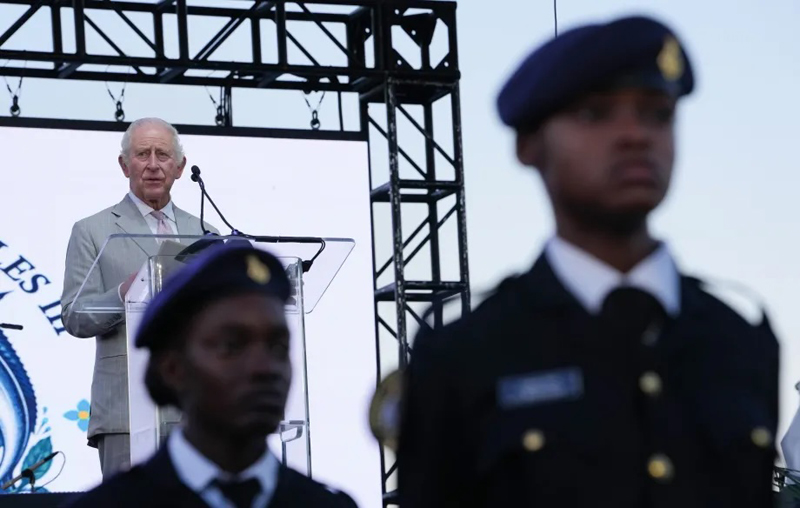
On Tuesday evening, he returned to Clifford Park, the very place where he had participated in the independence celebrations 53 years earlier.
This time, the occasion was called the Future Bahamas Youth Rally and Exhibition.
Young Bahamians gathered to showcase their musical, artistic and cultural achievements.
Choirs performed.
Young musicians demonstrated the country’s traditional rake-and-scrape music.
Students presented cultural performances reflecting the creativity and aspirations of a new generation.
And the King, looking out over a crowd of young Bahamians, recalled the extraordinary events of July 1973.
He remembered watching the Bahamian flag being raised for the first time.
He also remembered attending three independence balls in a single evening and dancing with Dame Marguerite Pindling.
In a moment of humour that connected the past with the present, he recalled the music of The Beginning of the End and Ronnie Butler and the Ramblers, contrasting it with the contemporary sounds of K.B.
His opening words, delivered in familiar Bahamian dialect, were equally well received.
“I reach, Amen!”
For a monarch whose public appearances are generally governed by elaborate protocol, it was a notably informal beginning.
But the significance of the occasion went well beyond royal charm.
Clifford Park had once provided the setting for the ceremonial birth of the nation.
Now it was being used to celebrate the generation that will determine its future.
A Different Bahamas
The country Charles visited in 1973 was still defining what independence would mean.
Sir Lynden Pindling, the nation’s first Prime Minister, led a government confronting the enormous responsibilities of building a sovereign state.
The Bahamas had inherited institutions, legal traditions and administrative structures developed under British colonial rule.
It also inherited deep social and economic inequalities.
Majority Rule, achieved in 1967, had begun transforming the country’s political landscape.
Independence represented the next decisive step.
But political sovereignty was only the beginning.
The newly independent Bahamas had to establish its international relationships, strengthen its institutions, expand educational and economic opportunities and develop a national identity that reflected the aspirations of its people.
Over the following five decades, the country would experience remarkable growth.
Tourism expanded into one of the Caribbean’s most important industries.
Financial services developed into a major contributor to the economy.
Bahamian athletes, musicians, artists, entrepreneurs and professionals earned international recognition.
The country developed its own diplomatic voice and assumed a more prominent role in regional and international affairs.
Yet many of the challenges that existed in 1973 remain familiar today.
Economic inequality.
Dependence on tourism.
The cost of living.
The need for greater diversification.
And the continuing effort to ensure that the benefits of national prosperity reach Bahamians throughout the archipelago.
Independence gave The Bahamas the authority to determine its own future.
The continuing challenge has been to translate that authority into opportunity for all its citizens.
A King Who Knows the Country’s History
Charles is an unusual figure in the history of Bahamian independence.
He personally witnessed the country’s transition from colony to sovereign state.
He knew the era of Sir Lynden Pindling.
He remembers the first raising of the Bahamian flag.
And he now occupies the constitutional position that his mother held when independence was achieved.
That continuity gives his return a historical dimension few visiting dignitaries could match.
In his remarks at Clifford Park, the King praised the country’s achievements, particularly the extraordinary talent produced by a relatively small population.
He spoke of Bahamian athletes, sailors, scientists and performers.
He celebrated Junkanoo as an expression of cultural identity passed from one generation to another.
And he acknowledged that the country’s history includes suffering as well as achievement.
It was this acknowledgement that introduced one of the visit’s most important and politically sensitive subjects.
The Unfinished Business of Colonialism
The history of The Bahamas cannot be separated from the history of slavery.
Enslaved Africans and their descendants played an indispensable role in the development of the islands, while enduring exploitation, oppression and the denial of basic human rights.
The abolition of slavery in the British Empire in 1834, followed by the end of the apprenticeship system in 1838, represented a profound turning point.
But emancipation did not immediately erase the social and economic consequences of slavery.
Nor did political independence in 1973 settle every question about the colonial past.
Today, across the Caribbean, those questions are being raised with renewed urgency.
Reparations advocates argue that Britain and other former colonial powers have a responsibility to acknowledge the lasting consequences of slavery and colonial exploitation.
Their demands include formal apologies, historical recognition and forms of reparatory justice.
Some proposals involve financial compensation.
Others emphasise education, healthcare, development assistance, debt relief and institutional reform.
During the King’s visit, members of the Bahamian Rastafarian community and other demonstrators gathered to demand an apology and reparations.
Their presence provided a striking contrast to the official celebrations.
On one side were cheering crowds, flags, music and ceremonial welcomes.
On the other were Bahamians insisting that the country’s relationship with the Crown cannot be understood without confronting the injustices of the past.
Both were expressions of Bahamian identity.
And both deserve to be heard.
An Acknowledgement, but Not an Apology
At Clifford Park, King Charles addressed the historical issue directly, though cautiously.
He acknowledged the suffering and injustices associated with the past and recognised that some of the country’s most vibrant cultural traditions emerged from painful historical circumstances.
He also noted that Commonwealth leaders would be discussing these matters at their forthcoming meeting in Antigua and Barbuda.
His remarks were significant.
They demonstrated that the monarchy recognises the growing importance of the reparations debate.
But they stopped short of a formal apology.
Buckingham Palace has indicated that the King will not issue such an apology during the Caribbean tour, maintaining that questions of reparations are matters for governments.
That distinction reflects the constitutional limitations of the modern monarchy.
The King is head of state, but British government policy is determined by elected ministers.
Nevertheless, critics argue that the monarchy itself has historical connections to the colonial system and therefore carries a responsibility that cannot be entirely separated from government.
Supporters of the constitutional monarchy respond that today’s monarch should not be held personally responsible for the actions of previous generations, and that the institution can play a constructive role in reconciliation.
The debate is unlikely to be settled by a single royal visit.
But the fact that it now forms part of the public conversation surrounding such visits illustrates how significantly the relationship has changed.
The King of The Bahamas — Not Simply a Visiting British Monarch
There is an important constitutional distinction that is frequently overlooked.
Charles III is not merely the King of the United Kingdom visiting a former British colony.
He is also King of The Bahamas.
The Bahamas became an independent constitutional monarchy in 1973, retaining the British sovereign as its head of state.
The King acts in his Bahamian constitutional capacity separately from his role in the United Kingdom.
His functions within The Bahamas are generally exercised by the Governor General, currently Dame Cynthia Pratt.
The country’s elected government, led by the Prime Minister and Parliament, is responsible for national policy and administration.
The monarch’s role is largely ceremonial and constitutional.
That arrangement has provided continuity since independence.
But it has also raised an increasingly important question.
Should a fully independent Bahamas continue to have a hereditary monarch residing thousands of miles away as its head of state?
Or should the country eventually become a republic with a Bahamian head of state?
The Republican Question
The Bahamas is not alone in considering that question.
Barbados became a republic in November 2021, replacing Queen Elizabeth II as head of state with a Barbadian president.
Prince Charles, as he then was, attended the transition ceremony.
The change did not mean that Barbados abandoned its relationship with Britain or the Commonwealth.
It remained a member of the Commonwealth while establishing a different constitutional structure.
Jamaica has also pursued discussions about becoming a republic.
Other Caribbean countries have considered similar changes.
For The Bahamas, the question is not simply whether the monarchy is popular.
It is whether the existing constitutional arrangement continues to reflect the country’s understanding of its sovereignty and national identity.
Supporters of retaining the monarchy point to constitutional stability, historical continuity and the limited political role of the Crown.
Republican advocates argue that an independent country should have one of its own citizens as head of state.
Neither position necessarily implies hostility toward Britain or its people.
And becoming a republic would not, by itself, solve the country’s economic or social problems.
It would be a constitutional and symbolic decision, with practical consequences determined by the particular system adopted.
Any such change would require the constitutional procedures applicable in The Bahamas, including a referendum.
The decision, ultimately, belongs to the Bahamian people.
Remembering the Men of the Flamingo
Wednesday’s programme included a particularly solemn engagement at the Royal Bahamas Defence Force base at Coral Harbour.
The King laid a wreath at the memorial honouring the four Bahamian marines killed when HMBS Flamingo was attacked and sunk by Cuban military aircraft in May 1980.
The fallen men were Fenrick Sturrup, Austin Smith, David Tucker and Edward Williams.
Their deaths remain among the most significant tragedies in the history of the Defence Force.
The attack occurred during an operation involving suspected illegal fishing in Bahamian waters.
It was a stark reminder that independence carries responsibilities extending far beyond flags and ceremonies.
A sovereign country must defend its territorial waters, protect its resources and maintain the institutions necessary to exercise its independence.
At Coral Harbour, the King met relatives of the fallen marines and surviving personnel.
He also inspected Defence Force members and spoke with serving personnel and veterans.
His wreath bore a message of remembrance.
For a visit so closely associated with the country’s independence, the tribute was especially appropriate.
The four marines died while serving the independent Bahamian state.
Their sacrifice belongs to the nation’s history.
Protecting the Bahamas of Tomorrow
Environmental conservation was another major theme of the visit.
On Wednesday, the King visited Bonefish Pond National Park, an important mangrove ecosystem on New Providence.
There he learned about efforts to protect coastal habitats and strengthen environmental resilience.
He met people involved in conservation and environmental education and planted a silver buttonwood tree.
The engagement reflected a longstanding personal interest.
Charles has advocated environmental protection for decades, well before climate change became a central issue in international politics.
For The Bahamas, the subject is especially urgent.
The country’s low-lying geography makes it particularly vulnerable to sea-level rise, stronger storms, coastal erosion and the destruction of marine habitats.
Hurricane Dorian demonstrated the devastating consequences of extreme weather for Abaco and Grand Bahama in 2019.
Mangrove ecosystems provide important natural protection for coastlines while supporting marine life and fisheries.
Their preservation is therefore not merely an environmental concern.
It is an economic and national security issue.
At Clifford Park, the King had urged young Bahamians to recognise their responsibility for the natural world they will inherit.
The visit to Bonefish Pond gave practical expression to that message.
A Royal Junkanoo
If the visit’s most solemn moments came at Coral Harbour, one of its most exuberant took place in downtown Nassau.
On Wednesday afternoon, the King joined celebrations featuring Junkanoo performers in colourful costumes, accompanied by the familiar rhythms of Bahamian music.
In a moment that quickly attracted international attention, Charles accepted a pair of Bahamian-coloured handbells and joined the procession, moving and dancing alongside performers.
It was an unusual sight.
A British monarch participating in one of the Caribbean’s most distinctive cultural traditions, surrounded by the music and creativity of an independent nation.
Junkanoo itself offers an intriguing historical connection.
Although its precise origins remain debated, the tradition developed within the history of slavery and emancipation in The Bahamas.
What began as an expression of celebration and cultural identity among people living under oppression has evolved into one of the country’s most recognisable national traditions.
The King’s participation was warmly received by many spectators.
Yet the celebrations also took place against the backdrop of continuing demands for reparations.
The juxtaposition was revealing.
The same cultural tradition could provide an occasion for joyful national celebration and a reminder of a painful historical inheritance.
The two interpretations are not mutually exclusive.
Indeed, that complexity is part of what makes Bahamian history so compelling.
A Visit Focused on the Next Generation
The King also visited the Bahamas Boxing Academy, where he watched young athletes training and spoke with participants.
The engagement highlighted programmes intended to provide discipline, confidence and opportunity for young people.
Together with the youth rally, the visit underscored a recurring theme.
The Bahamas of 2026 is not the Bahamas of 1973.
Its future will be determined not by the generation that achieved independence, but by those who have inherited it.
The King’s programme concluded on Wednesday with a garden reception at Government House, hosted by Governor General Dame Cynthia Pratt.
The gathering recognised Bahamians who have contributed to public life and national development.
His departure is scheduled for Thursday, October 29, after which he continues his Caribbean tour.
Fifty-Three Years of Change
When Prince Charles attended the independence celebrations in 1973, he represented the monarch of a country relinquishing its colonial authority over The Bahamas.
When King Charles returned in 2026, he did so as the constitutional head of an independent nation.
The distinction is profound.
In 1973, The Bahamas was beginning a new chapter.
In 2026, it is a mature sovereign state confronting the questions that arise after more than half a century of independence.
Those questions include economic development, national identity, environmental security, historical justice and constitutional reform.
The royal visit did not resolve them.
Nor was it intended to.
But it brought several of them into unusually sharp focus.
For some Bahamians, the King’s return was an occasion to celebrate historical continuity and the country’s enduring relationship with the Commonwealth.
For others, it highlighted the unfinished business of colonialism and the need to reconsider the monarchy’s place in a modern Bahamas.
For many, it was simply an opportunity to participate in an event of considerable historical significance.
These perspectives need not be treated as mutually exclusive.
A country can respect its history without being bound by every institution inherited from that history.
It can maintain friendships with former colonial powers while insisting upon an honest examination of the past.
And it can celebrate its achievements while acknowledging the work that remains to be done.
The Real Meaning of the King’s Return
Perhaps the most remarkable aspect of this week’s visit was not the ceremony, the speeches or even the sight of a British monarch dancing to Junkanoo.
It was the passage of time.
Fifty-three years ago, a young prince stood at Clifford Park and watched a new nation emerge.
This week, the same man returned as King and witnessed what that nation has become.
The Bahamas has changed enormously.
So has the monarchy.
And so has the world.
The young Bahamians who performed at Clifford Park were born decades after independence.
For them, the events of July 1973 belong to history rather than personal memory.
They have inherited a country whose sovereignty was secured by an earlier generation.
Their task is to determine what that sovereignty will mean in the decades ahead.
Whether The Bahamas ultimately retains the monarchy or becomes a republic is a decision for another day.
But the larger principle is already settled.
The country’s future belongs to its people.
In 1973, Prince Charles watched the Bahamian flag rise over a newly independent nation.
In 2026, King Charles returned to find a country still raising its ambitions, still examining its history and still determining the full meaning of independence.
The Prince who witnessed the birth of the nation had returned as its King.
But the most important story was never about the Crown.
It was, and remains, about The Bahamas.