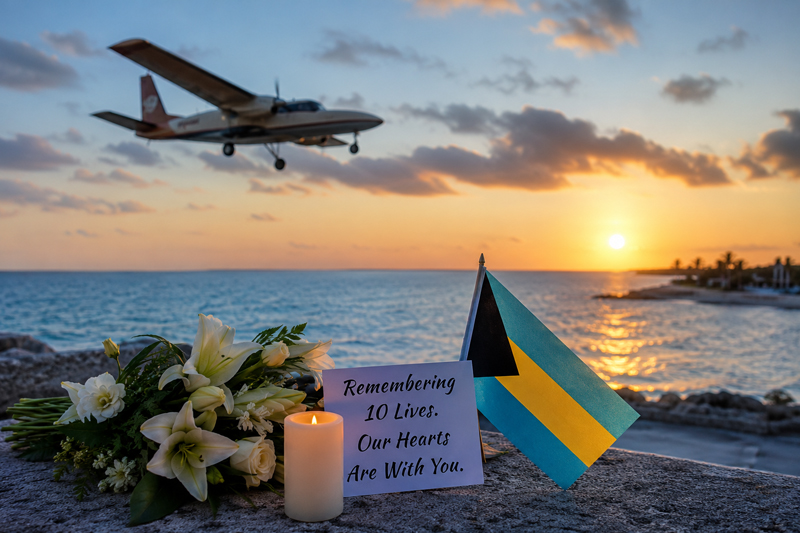
The Bahamas is once again mourning the devastating loss of life following the crash of a Flamingo Air aircraft near North Andros, an accident that claimed the lives of all ten people on board. Families are grieving, communities have been shaken, and the nation is waiting for investigators to determine what caused another heartbreaking chapter in Bahamian aviation history.
Among those lost were members of the well-known Bahamian music group Da Pond Band, making the tragedy especially personal for many across the islands. As officials work through the difficult process of identifying victims and examining the wreckage, the focus remains where it should be—on finding facts rather than assigning blame.
At the same time, the accident has revived a question that has surfaced after previous aviation disasters: Have enough lessons been translated into meaningful, lasting improvements?
For many Bahamians, the parallels are impossible to ignore. Nearly a quarter-century ago, the crash that claimed the lives of international recording artist Aaliyah and eight others prompted extensive investigations, public scrutiny, and renewed commitments to strengthening aviation oversight. The findings from that tragedy led to recommendations aimed at improving operational safety, regulatory enforcement, and accountability.
It is important to emphasize that investigators have not determined the cause of the North Andros crash, and there is no evidence that the circumstances mirror those of the Aaliyah tragedy. Every accident is unique and deserves to be evaluated on its own facts. Yet the recurrence of another fatal crash involving a small aircraft serving the Family Islands has understandably reignited discussion about whether previous recommendations have been fully implemented and consistently enforced.
The Bahamas depends on air travel in ways few countries do. For thousands of residents and visitors alike, regional airlines are not a luxury—they are an essential part of daily life, connecting families, businesses, medical services, and tourism throughout the archipelago. Public confidence in that system depends on a commitment to continuous improvement, not only after tragedy strikes, but every day.
The official investigation will ultimately determine what happened on this flight. Whatever its conclusions, many hope its findings will lead to practical action that strengthens aviation safety for the future. The greatest tribute that can be paid to those who lost their lives is to ensure that every possible lesson is learned—and remembered.