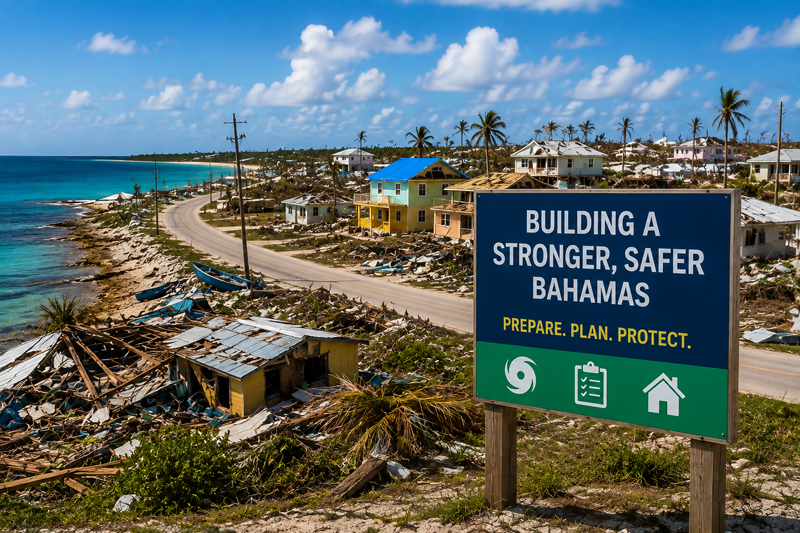
NASSAU, Bahamas — Seven years ago today, Hurricane Dorian made landfall in The Bahamas, devastating Abaco and Grand Bahama and forever changing the way the country thinks about hurricanes.
There has been progress since Sept. 1, 2019.
The Bahamas now operates under the Disaster Risk Management Act, which created a more comprehensive framework covering preparedness, risk reduction, response and recovery. The country also maintains disaster financing mechanisms intended to make money available more quickly after a catastrophe.
But Dorian also taught The Bahamas that preparedness cannot simply mean tracking a storm and buying plywood.
Housing, communications, electricity, evacuation routes, shelters and the ability of government agencies to function after catastrophe are all part of the equation.
And important vulnerabilities remain. As the 2026 hurricane season began, disaster officials reported that The Bahamas had 144 shelters capable of accommodating about 14,000 people — still below the international benchmark of shelter capacity for roughly 10 percent of the population.
Today, even as the remnants of Tropical Storm Dolly pose no significant cyclone threat, hurricane season is approaching its traditional peak.
So perhaps the most useful way to remember Dorian seven years later is not simply to ask whether The Bahamas has rebuilt.
It is to ask whether the country has learned.
Because eventually another major hurricane will come.
And the true measure of Dorian’s legacy will be how well The Bahamas is prepared when it does.
BahamasB2B | Sept. 1, 2026